

01.
 722
722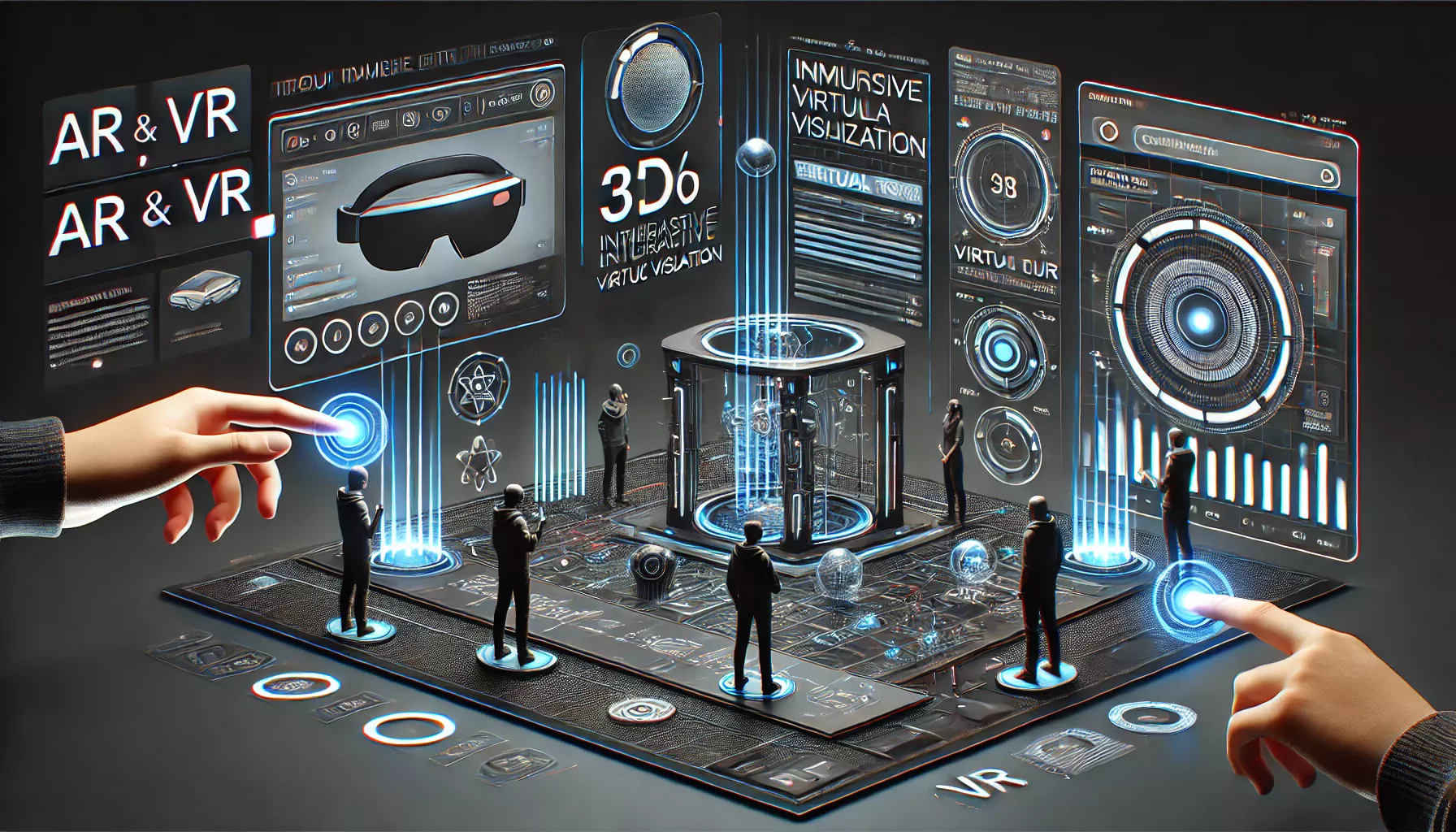
Augmented Reality (AR) and Virtual Reality (VR) are rapidly transforming how users interact with websites. By 2025, these technologies will become an integral part of the digital space, offering new opportunities for audience engagement, improved user experience, and higher conversion rates. In this article, we will explore how web studios and businesses can integrate AR/VR into their websites, what technologies to use, and what to consider.
Why Implement AR/VR on Websites?
-
Increased Engagement – Interactive 3D elements keep users on the site longer.
-
Enhanced UX/UI – Users can interact with products and services in a new format.
-
Higher Conversion Rates – The ability to visualize products before purchase increases customer trust.
-
Competitive Advantage – Innovative technologies set a brand apart from competitors.
What Technologies to Use?
1. WebXR API
The main standard for implementing AR/VR in browsers. It allows the creation of immersive web applications without requiring additional installations.
2. Three.js and A-Frame
These JavaScript libraries simplify working with 3D graphics on the web. Three.js is used for complex visualizations, while A-Frame is ideal for quickly creating VR scenes.
3. ARKit and ARCore
For mobile device integration, consider ARKit (for iOS) and ARCore (for Android), which enable AR functionality in web applications.
4. 8th Wall
A WebAR platform that allows AR experiences to run directly in the browser without the need for app downloads.
How to Implement AR/VR on a Website: Step-by-Step Guide
Step 1: Define the Purpose of Implementation
Before starting, determine why you need AR/VR:
-
3D product demonstrations
-
Virtual tours
-
Interactive presentations
Step 2: Choose the Right Platform and Technologies
Identify which tools suit your needs: WebXR API for browser-based solutions or 8th Wall for WebAR.
Step 3: Develop a Prototype
Use A-Frame or Three.js to create initial prototypes and test functionality.
Step 4: Optimize Performance
Immersive content requires optimization:
-
Use glTF models instead of OBJ
-
Minimize the polygon count of 3D objects
-
Load resources as needed (lazy loading)
Step 5: Test on Different Devices
Ensure AR/VR functionality works across various browsers and devices (mobile and VR headsets).
Step 6: Launch and Analyze
After implementation, track metrics (time on site, engagement) and refine the user experience.
Successful Implementation Cases
-
IKEA Place – Virtual furniture placement through AR.
-
Nike Virtual Try-On – An example of AR for online shoe fitting.
-
BMW Virtual Showroom – Interactive car viewing in VR.
AR and VR are powerful tools for web studios and businesses, enabling the creation of innovative user experiences. In 2025, WebXR, Three.js, and 8th Wall will become standard technologies for web development. The key is to choose the right implementation strategy and stay updated on trends.

Last News

Cloud Technologies in Web Development: New Opportunities in 2025
Content Personalization Through AI: Trends for 2025

Overview of Popular CMS for Websites in 2025


Send comment